Case File #001: The Long Tail
The Great Lakes Media Group yard in Cleveland didn’t smell like the future. It smelled like diesel, rust, and fifty years of Lake Erie wind.
Stan Donnelly paused at the bottom of the stairs to the old Unit 4, the 1080i relic being retired today. He looked over at Miguel Alvarez. Miguel simply said it had been a good truck to work on.
“Jenkins is early,” Stan muttered, nodding toward the black sedan.
“She’s always early when she’s about to kill something,” Miguel replied.
“You think Warren was telling the truth? We’re actually moving to the new build?” he added.
“Warren doesn't lie,” Stan said. “He just reframes. If he says we’re about to find out, we’re about to find out.”
Inside the Conference Room
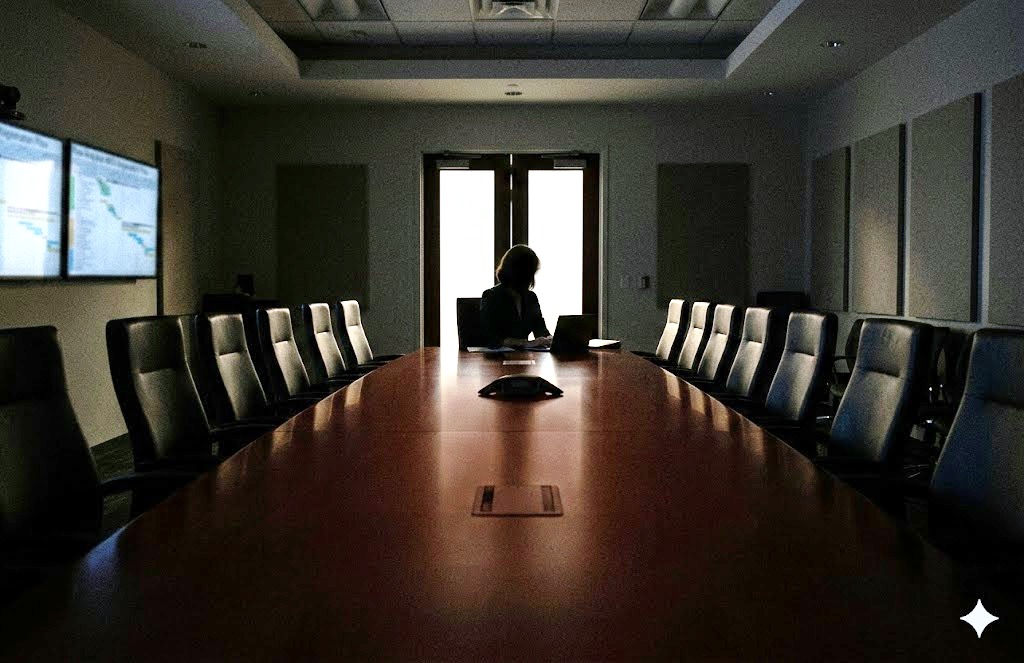
Sarah Jenkins, TBC’s VP of Engineering, didn’t look up from her phone right away. She was a compact woman in her late forties who had earned a reputation as the person brought in to “rationalize” aging fleets. To her, the old DuMont flag on the wall wasn’t heritage. It was a symbol of romantic inefficiency.

“Stan. Miguel,” she said finally, slipping the phone into her jacket. “This is August Mercer. Gus designed the Erie.”
Gus offered a confident nod. Jenkins continued without ceremony.
“We’re done subsidizing nostalgia. The Erie is our statement truck. Pure 2110. No more throwing good money after bad keeping these old SDI boats afloat. I expect everyone to get on board quickly.”
She glanced at Stan, reading his expression.
“I know it’s a leap, Stan. But the math is clear. We can’t keep operating like it’s 2008. Not if we want to stay in the game.”
Gus was thirty-four, wore a crisp polo, and looked like he spent more time with Python scripts than BNC crimpers. Stan reached out a hand, but Gus was already unrolling a set of D-sized engineering drawings across the large table.
The Erie Reveal
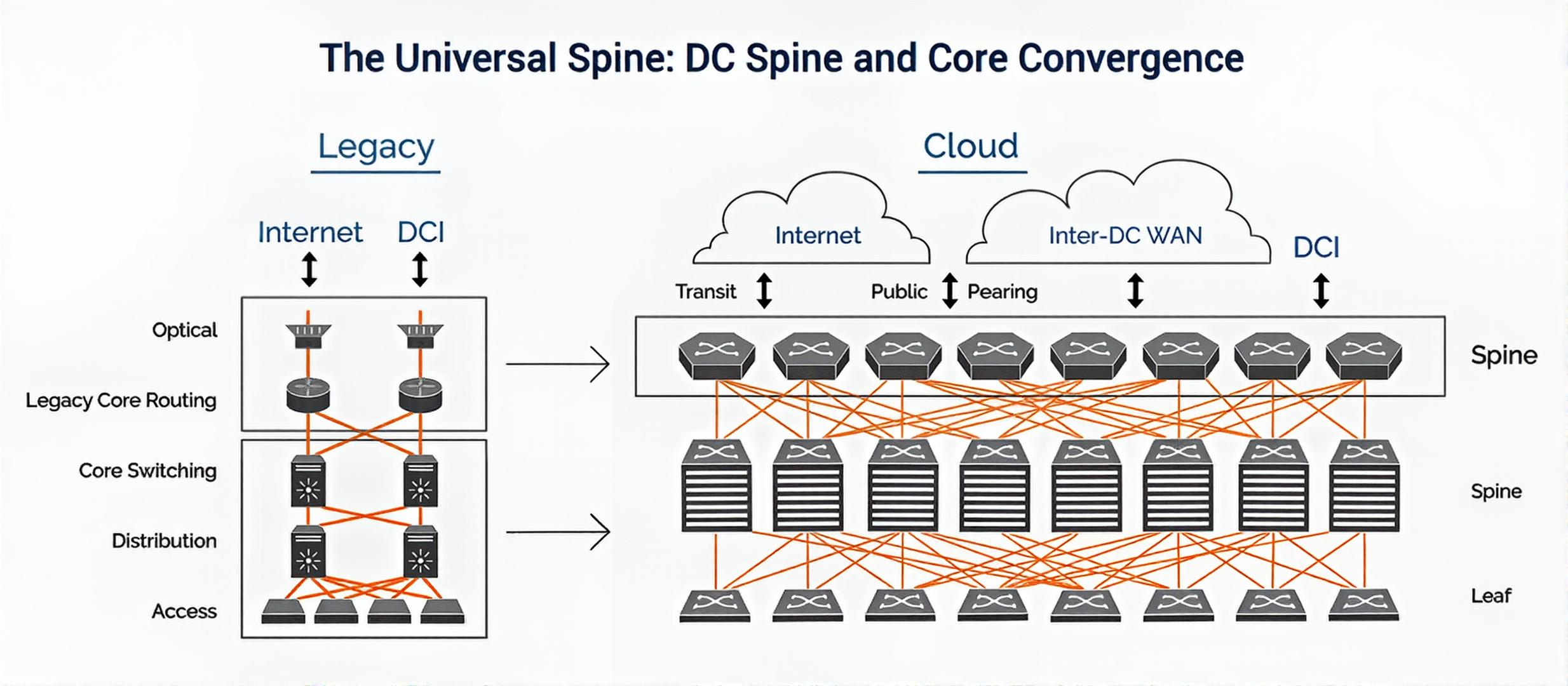
“The Erie is a pure native ST 2110 build,” Gus began, his voice buzzing with the confidence of a man who saw the world in headers and payloads. “We’ve eliminated the SDI crutches. Everything happens in the IT fabric, high-end spine-and-leaf switches , redundant 100GbE NICs . It’s 3D chess, while the rest of the TBC fleet is still playing checkers.”
Stan stared at him for a long second, trying to decide whether he was deliberately condescending or just drunk on his own enthusiasm.
Stan finally spoke, his voice low and even.
“Easy there. Some of us have been playing checkers for thirty-five years and winning with it. You might want to remember that before you start calling the rest of the fleet obsolete.”
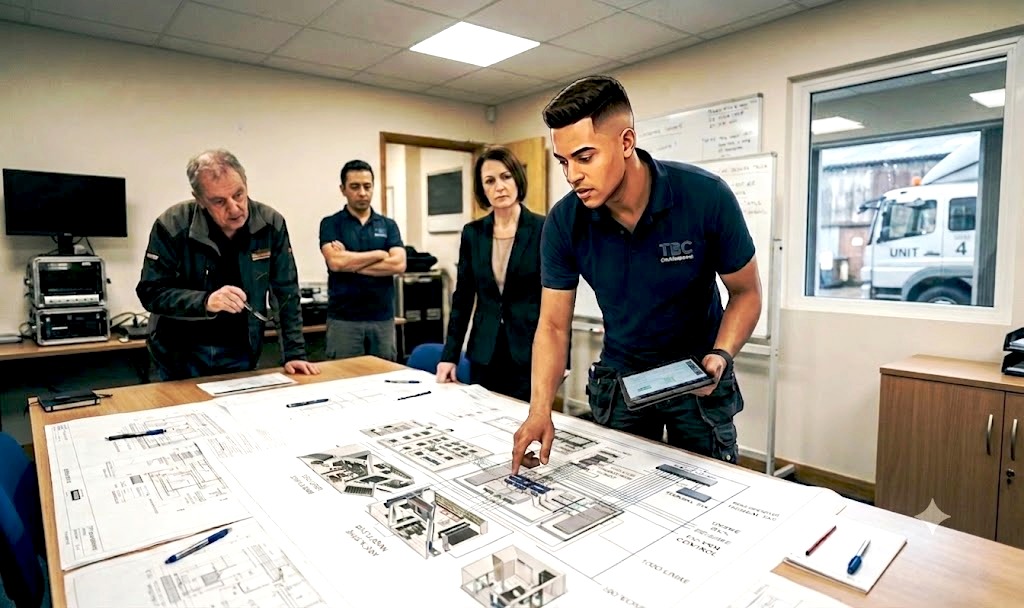
Miguel, either out of frustration or some amount of bravery, blurted out, “When the board catches fire, the guy who knows where all the pieces actually are usually does better than the one who’s busy admiring how elegant the rules are.”
To relieve the tension, Stan looked back down at the drawings.
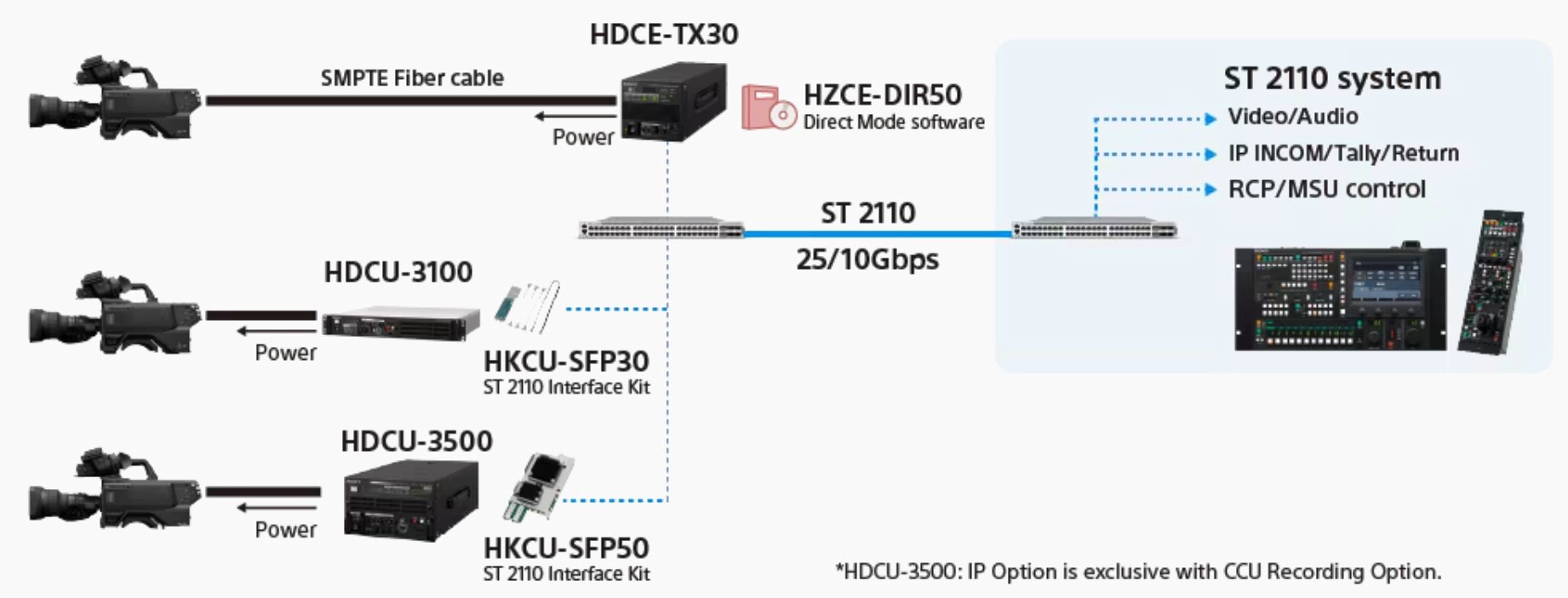
“Gateways?” Stan asked, leaning over the drawings. “Where’s the acquisition flow? I don't see the parallel SDI paths for the Sony 5500s.”
Gus offered a thin, snide smile. “Sources are trivial, Stan. The edge devices handle them. The 'Invisible Infrastructure' is where the show lives now. We don't need a safety net when the logic is this clean.”
Jenkins casually announced that Gus would be the EIC on the new 2110 truck, and that Stan and Miguel would be his assistants. “Stan, Miguel, have any problems with that?” They both shook their heads. She said their training starts now.
The Drawings
Stan and Miguel stared at the large drawings unrolled across the table. Both men were fluent in synoptic diagrams, the high-level conceptual maps as well as the dense, detailed system drawings. An experienced engineer could usually look at a set like this and instantly understand the facility’s “food chain,” where the signals came from and how they flowed toward output.
But this drawing didn’t work that way.
Stan’s eyes moved across the page, searching for the familiar left-to-right logic he had followed for decades. It wasn’t there. Sources, processing, and destinations were no longer arranged in a straight line. Everything was interconnected through an invisible IP fabric. The old rules had been erased.
Jenkins’s voice cut through his thoughts. “Gentlemen, let’s go see the truck.”
Miguel gave Stan’s sleeve a light tug. Stan blinked, folded his glasses, and followed them out without a word.
Inside the Erie
Lake Erie's name comes from the Iroquoian word erielhonan, which means "long tail" or "cat". Someone commented that the only Great Lake you could not see any part of was Lake Erie! Miquel thought the creature should be called a lion snake.
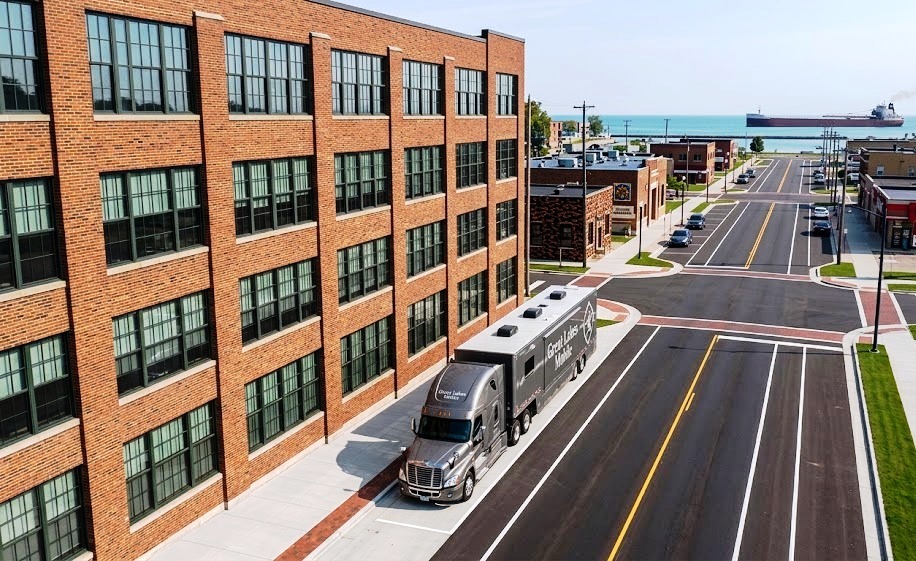
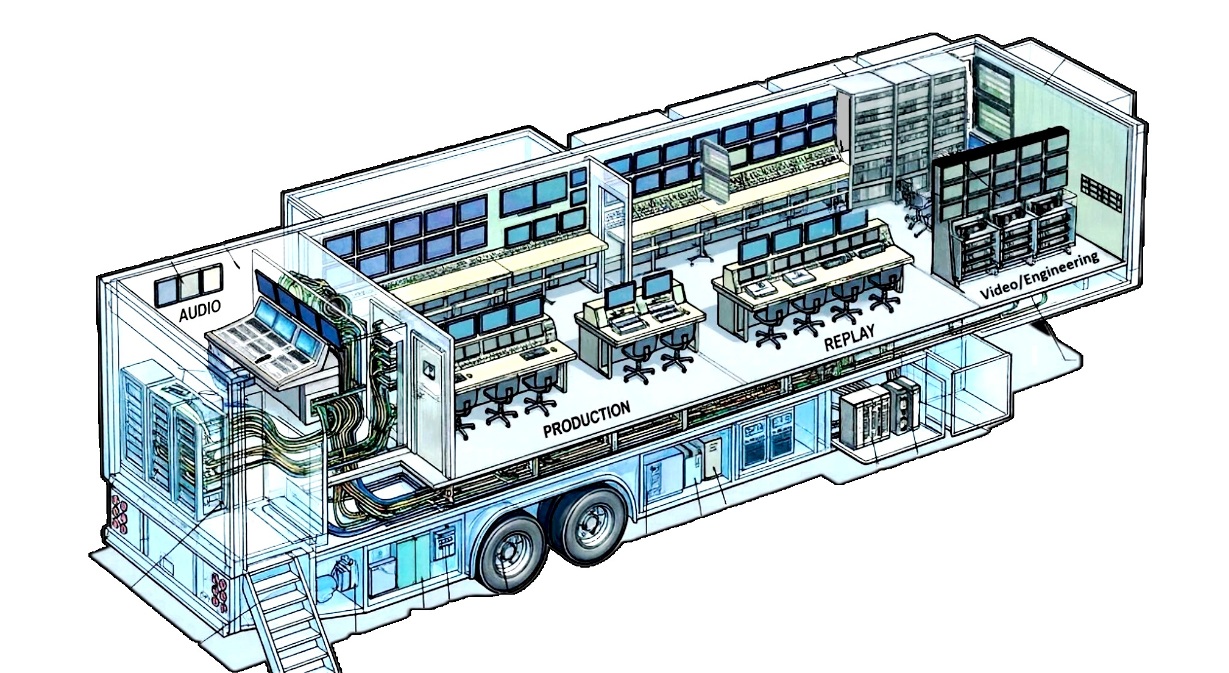
They walked to the farthest bay, where the Erie sat. A 53-foot Expando that represented TBC's "Hail Mary" to look like a first-tier operator.
Stan stepped inside and took a deep breath. In the old trucks, he’d smell ozone, hot dust, and tape oxide. Here, it was just the sterile, chilled scent of a server room and plastic cable jackets.
“The routing is entirely logical now,” Gus boasted, pointing to a tablet running VSM. “No more bulkheads of BNCs. If I want to move Camera 1 to the Director's monitor, it’s a multicast join, not a patch cord.”
The truck felt strangely sterile. The usual low hum of fans and the faint smell of warm electronics were replaced by the soft whoosh of high-capacity cooling fans and the chilled air of a server room. Rows of sleek switches glowed with steady blue and green lights, their fans spinning at a low, constant pitch.
Miguel was staring at a monitor labeled Replay 1. It was blank.
Gus noticed. “Ah, simple NMOS registration issue,” he said, dismissing it with a few taps on his laptop. The feed snapped into place.
“See?” Gus said. “The network is doing exactly what it was told to do.”
“It looks healthy,” Stan admitted, but his eyes stayed fixed on a physical Sony HDC 5500 CCU nearby. “Then why is that tally light flickering?”
Gus glanced at his “Single Pane of Glass” dashboard. “All green, Stan. Probably just a legacy tally relay acting up. The packets are fine.”
“Nobody watches packets, Gus,” Stan muttered. “They watch television.”
The Quiet Truck
The tour continued through the truck, which was noticeably quieter than most OB vehicles they had worked on. “It’s quiet because the heavy lifting is virtualized,” Gus explained proudly. “Most of what used to be dedicated hardware boxes is now software running on servers and the network. Fewer fans, fewer moving parts.”
Stan stopped in front of a rack of the many switches and held his hand near the intake vents. “It’s quiet because it’s freezing in here,” he said. “You’ve got a serious Thermal Tax on these things, Gus. These high-speed 100GbE switches throw off a lot of heat. The cooling system is working overtime to keep them from cooking themselves. If that managed cooling logic fails for even thirty seconds during a show, these switches are going to hit their thermal limit, shut down, and take half the truck with them.”
Gus shrugged. “That’s why we have redundant cooling logic. Plus, Red and Blue paths, Stan. Hitless protection.”
All the while Stan thought he saw monitors hiccup off in the periphery. Miguel had seen it too. The two briefly looked at each other.
The Conversation
Jenkins had heard enough. She mentioned that Gus had things covered, told Stan and Miguel to come up to speed quickly on the new truck, and left saying she had a plane to catch. After Jenkins left for the airport, the air in the truck grew heavy. Stan cornered Gus in the Engineering row.
With Jenkins gone, Stan knew it was now or never to correct what he believed was the truck’s fatal flaw.
“Gus, we need to add some SDI infrastructure before this hits the road. The operators will struggle. When something breaks, they won’t know where to look. Everything is just invisible packets now.”
“Stan, the design is clean,” Gus exclaimed. “Full 2110. No old SDI crutches. That was the whole point, to build something future-proof.”
Stan pressed on. “Future-proof doesn’t help when we’re live on air and the PTP timing starts acting up, or NMOS loses a device. We have no backup plan. The crew might spend more time hunting signals than producing the show.”
Gus replied, “We have NMOS and monitoring tools. It’s all there.”
Stan almost pleaded. “It’s there for people who think like IT guys. Not for a replay operator who just wants Camera 7 back. We need at least some parallel SDI paths for the important stuff: main program, key cameras, replay. And we need some kind of simple control layer that makes this IP stuff feel like normal broadcast equipment.”
Gus snapped, “You’re basically asking for another control layer. That’s a lot of extra work.”
“Actually, our worthy and much larger competitor,” Stan replied, “ NEP developed one. They were worried about how engineers, techs, and especially operators would cope with the IT underflow. They are now selling it. But there are many others now: Grass Valley, Lawo, Evertz, Imagine, Ross, Riedel, Sony, Imagine.”
Gus looked genuinely bewildered. “Besides Sony I’ve never heard of any of those companies. How can they know enough to produce something like that?”
Stan: “They had to learn the hard way. Just like I’m doing now. And, no offense, you’re going to have to learn some actual broadcasting too.”
Stan tried to press his argument home. “I’m asking for something that keeps the truck reliable. You built it pure and elegant. That’s great on paper. But right now, the crew won’t fully trust it. We either add some SDI safety net and a basic control overlay, or I see problems ahead.”
Warren Arrives
“Slow down,” a voice said from the doorway. Warren Whitlock, the CTO Emeritus, had come up the stairs unnoticed and was leaning against the frame. “Let’s separate what we know from what we think.”
Stan gathered his thoughts. The conversation had jumped from concrete issues to the overall control philosophy of the truck. “We know we have a tally issue,” he said. “And as an old SDI guy, I see monitors taking occasional hits. Makes me wonder if we’ve got a sync problem. Yeah, I know it’s PTP on this truck now.”
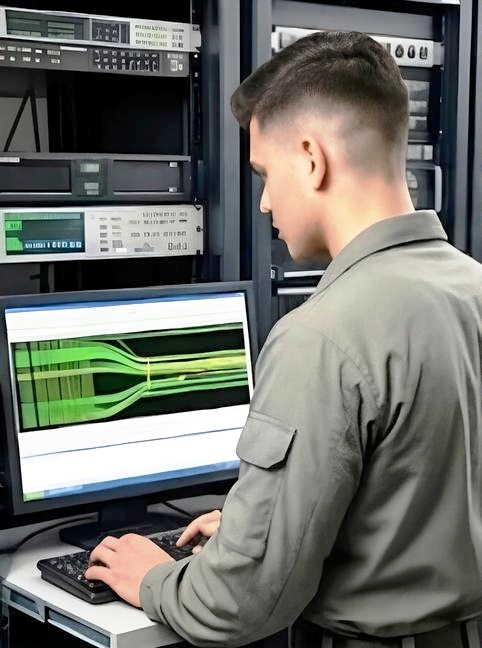
Meanwhile Gus had sat down at the engineering station and was studying a 2110 waveform monitor. For several long seconds the only sound was the low rush of cooling fans.
Then his eyes widened.
“My god, Stan’s right,” he said, almost under his breath. “There’s a PTP Priority conflict. A legacy master clock we integrated from the old truck is trying to claim Grandmaster status. The BMCA is flip-flopping…”
Stan and Miguel exchanged a quick glance, eyebrows raised, the faintest trace of a smile on Stan’s face.
Gus leaned back in the chair, staring at the screen. His voice dropped to a near whisper.
“The network is healthy… but the video is broken.”
Warren’s Counsel
Warren, who was officially retired, still had an office and showed up two or three times a week. He sat down in a chair in the video section of the trailer, leaned back, took off his glasses, and looked at the three men facing him.
“Gentlemen, let me say something that might not be popular,” he began, his voice calm but carrying weight. “Gus, I admire the purity of your design. A clean, all-2110 truck is the right long-term vision. But right now, we’re not living in the long term. We’re living in the messy interim.”
He turned slightly toward Stan and Miguel.
“Stan, you’re worried about reliability.
Miguel, you’re the one who has to keep this thing running with a short time to air, while the client is screaming.
And Gus… you want to push the technology forward. All three positions are correct.”
Warren continued, his tone measured and patient. “Stan and I have seen this movie before, Gus. Every revolutionary leap in our industry needed a transition period. When color television arrived, most facilities didn’t flip the switch overnight and go fully color. They started with islands of color; one studio, one control room, one set of cameras at a time, while the rest of the plant stayed black-and-white. It was the same with digital, with HD, and with the ATSC transition. We built islands of new technology that slowly grew into seas. 2110 is going to follow the same pattern. A pure all-2110 truck is the destination, but right now we’re still building the bridge. Let’s not burn the old one behind us until we’re sure the new one can carry the weight.”
After a pause Warren continued. “That said, here’s my suggestion: Keep the 2110 core exactly as you designed it. But add a modest set of training wheels for this first truck.”
Warren held up two fingers.
“First, run a small traditional SDI router, nothing huge, just enough for the main program bus and a handful of critical paths. Second, wire some of the key devices, especially cameras and replay, in parallel through gateways to both the 2110 network and that SDI router.
It’s not a compromise of the vision, Gus. It’s insurance. We’re still learning how 2110 behaves under real field conditions. Thermal issues, PTP glitches, NMOS hiccups. Having a parallel SDI safety net means we can flip a few switches and keep the show on the air if the IP side gets grumpy.
Once we have a dozen shows under our belt and real confidence in the system, we can phase the SDI router out. But for Truck One? Let’s not bet the entire production on perfection on day one.”
He looked directly at Gus with a small, knowing smile.
“Even the best engineers need training wheels for a little while. The smart ones admit it before they fall off the bike.”
“But Gus, there is one more thing.” Warren leaned forward slightly. “Even with a solid 2110 backbone, you’re probably going to need some kind of orchestration layer, a control system that sits on top of all that NMOS IP infrastructure.
Engineers can learn to think in packets, PTP domains, and NMOS flows. That’s fine. But the operators, the people calling the shots during a live show, need control surfaces and panels they can use quickly and instinctively. They shouldn’t have to become network engineers to route a camera or recall a preset. That’s what a good orchestration system gives you: it hides the complexity and makes the truck feel like a broadcast facility, not a data center on wheels."
Stan now suspected that Warren had been listening for a while before he appeared.
Warren continued. "Usually these systems come as part of a larger control ecosystem. Lawo VSM, Grass Valley AMPP, things like that. Since TBC is a solid mid-tier truck company and the fifth player in a seven- or eight-network universe, we still actually have enough clout to horse-trade with one of the vendors. We can negotiate a scaled-down or customized version that fits our budget and timeline. It’s worth pursuing. I’ll help with this.”
“And let me say this diplomatically if I can, Gus… Having supreme IT savvy doesn’t eliminate the need for broadcasting savvy. The best systems in this industry have always married the two. The technology can be pure 2110. The operation still must feel like television.”
Gus was quiet for a moment, then nodded slowly. “I hear you,” he said.
Warren closed with a small smile. “I’ll tell you what. I’ll talk to Jenkins. I’ll sell her on the fact that this insurance is needed for the truck. Especially on our first one. Most people had no idea that this kind of orchestration layer would even be necessary when they were first exposed to 2110. We’re all learning as we go.”
Warren got up, started to exit the truck, and added one more thing. “Fellows, I think this situation will work better for now if you all consider yourselves EIC. No, better yet, you are all each other’s assistants. You are going to be learning from each other.”
Warren carefully walked down the steps, paused, and said, “Gus, Truck Two won’t need the SDI router.”
Everyone looked surprised. Before Gus could react, Stan asked, “Why?”
Warren smiled. “Truck One is going to teach us why.”
Erie Log Entry
Date: June 24, 2026
Location: GLMG Yard, Cleveland
Reported Symptom: Intermittent tally strobe on Camera 4; intermittent sync errors.
Actual Cause: PTP Priority conflict caused by a legacy device triggering BMCA re-elections during registration.
Corrective Action: Hard-coded PTP Priority values; implemented a hybrid SDI fallback for the Main Program path using salvaged HD-SDI gear.
Operational Impact: Stabilized facility timing.